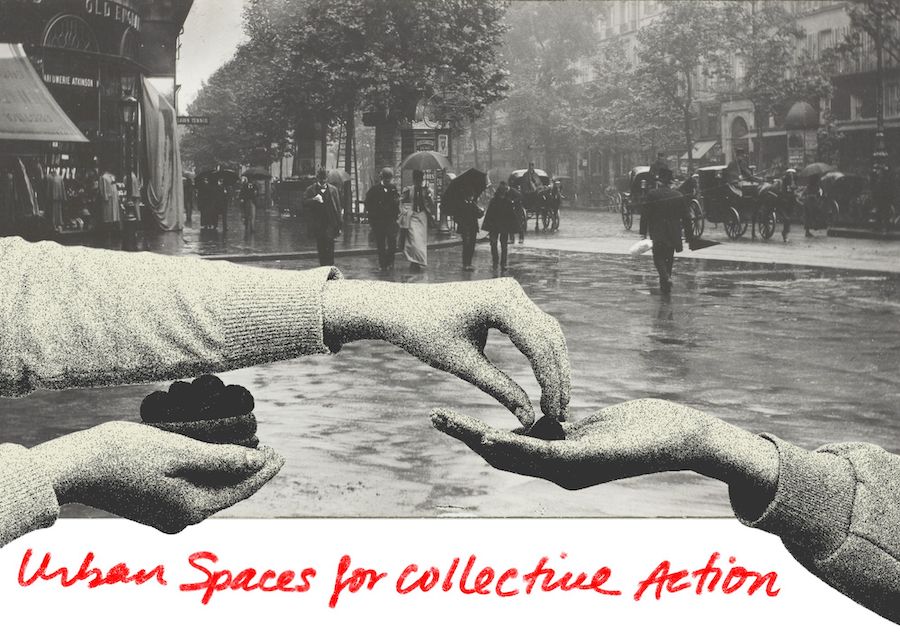
Urban spaces for collective action Residency program
Themes related to the World Congress of Architecture, Barcelona 2026
Far from being a passive backdrop, architecture has always operated as a mechanism of power. Cities have been constructed based on logics that organize bodies, classify behaviors, and regulate movement. Thus, space can become both a tool of institutionalized violence—through segregation, policing, territorial exclusion, or housing precariousness—and a catalyst for social empowerment, where communities exercise their right to reclaim the city, contest its form, and redefine the conditions of habitability.
Application Deadline: May 22, 2026
Program Start Date: June 1
Exhibition Opening: June 18
Program End Date: July 3
View Calendar
For details regarding pricing and what our residencies include, please follow the link below:
read general open call
In the contemporary urban context, collective rights, the right to housing, civil dissent, minority groups, and struggles for equality are all intersected by spatial decisions: who has access, who is displaced, who is allowed to remain, and who is rendered visible or invisible and precarious within the urban fabric. These decisions define the blurred boundaries between the productive and reproductive spheres: paid labor and care work, domestic space and public space.
As Hannah Arendt points out, politics does not arise in isolation, but in the shared space where people appear before one another through action and speech. To design the city is, therefore, to design possibilities: plazas that enable assembly, thresholds that invite encounter, and architectures that activate interpersonal bonds rather than inhibiting them.
By recognizing these interdependencies, we can imagine environments organized not around control or profitability, but around care, cooperation, and spatial justice. Architecture thus becomes a terrain for reconfiguring solidarities, expanding urban rights, and building infrastructures that sustain dignified and common lives.
Listed below are the main themes covering architecture, politics, and the city, as well as several inspirational references.
1. THE RIGHT TO HOUSING
The right to housing is violated by real estate speculation, forced evictions, «touristification,» and the financialization of land. Housing ceases to be a human right and becomes a commodity, leading to displacement, precariousness, and structural exclusion within the city.
Failed social housing policies that lead to overcrowding, or speculative practices that empty entire neighborhoods.
Political Opportunity: Cooperative models, non-speculative housing, and democratic access to land.
Artistic References
– Martha Rosler — If You Lived Here… (1989). An exhibition and community project on the housing crisis, gentrification, and homelessness in New York.
– Krzysztof Wodiczko — Homeless Vehicle Project (1988–89). Mobile dormitory vehicles for the homeless, blending design, sculpture, and activism.
– Superflex — Foreigners, Please Don’t Leave Us Alone with the Danes! (2002–). A critique of exclusion, belonging, and access to urban living.
Architectural/Urban References
– Santiago Cirugeda — Rooftop Housing Prototypes (Recetas Urbanas). Self-built housing in legal loopholes.
– Elemental — Quinta Monroy Incremental Housing (Iquique). A social housing model open to progressive self-construction.
Authors / Artists
Martha Rosler, Krzysztof Wodiczko, Superflex, Santiago Cirugeda, Alejandro Aravena / Elemental.
2. DESIGN AS A MECHANISM OF POWER
Urban design regulates behavior, controls flows, excludes bodies, and reinforces hierarchies. Defensive urbanism, video surveillance, hostile zoning, and anti-homeless design transform space into a political technology of control.
Opportunity: Inclusive design that enables the presence of marginalized bodies and practices.
Artistic References
– Teresa Margolles — La promesa (2012). Ruin, structural violence, and power inscribed in urban space.
– Hito Steyerl — How Not to Be Seen: A Fucking Didactic Educational .MOV File (2013). A critique of regimes of visibility, surveillance, and spatial control.
– Krzysztof Wodiczko — Projections on Government Buildings (since the 80s). Buildings of power become surfaces for public denunciation.
Architectural/Urban References
– Critical interventions on hostile furniture (anti-homeless) transformed into hospitable furniture.
. Redesign of surveilled spaces to reclaim free and spontaneous uses.
Authors / Artists
Hito Steyerl, Teresa Margolles, Krzysztof Wodiczko, Forensic Architecture, Trevor Paglen.
3. CIVIL DISSENT AND PUBLIC VISIBILITY
Political, sexual, racial, and cultural dissent depend on the occupation of public space to exist. Privatization, the criminalization of protest, and policing reduce the possibilities for collective appearance.
Opportunity: Designing spaces that allow for democratic assembly, expression, and encounter.
Artistic References
– Tania Bruguera — Tatlin’s Whisper #6 (2009). An open microphone for free political expression within an institutional space.
– Suzanne Lacy — The Roof Is on Fire (1994). A public debate by youth on race, violence, and urban exclusion.
– Carlos Motta — Deseos / Deśires (2015). A living archive of sexual dissent and the political space of the body.
Architectural/Urban References
– Temporary assembly platforms for protests and citizen gatherings.
– Activation of politically «emptied» plazas through ephemeral meeting structures.
Authors / Artists
Tania Bruguera, Suzanne Lacy, Carlos Motta, Raumlabor Berlin, Judith Butler (theoretical basis on assembly).
4. PRODUCTIVE AND REPRODUCTIVE INTERDEPENDENCIES
The city renders productive labor visible while concealing care, domestic, and affective work. This separation reproduces inequalities regarding gender, time, the body, and access to urban resources.
Opportunity: Care infrastructures, community facilities, and hybrid housing-work models.
Artistic References
– Mierle Laderman Ukeles — Maintenance Art Manifesto (1969) + Touch Sanitation (1979–80). Elevating cleaning and maintenance work to public artistic action.
– Silvia Giambrone — Things That Happen When People Are Not Looking (2014). Domestic violence, control, and politicized private space.
– Mary Kelly — Post-Partum Document (1973–79). Child-rearing, body, time, and reproductive labor as a political archive.
Architectural/Urban References
– Public laundries, community kitchens, and daycares as urban infrastructure.
– Cooperative housing with collective care spaces.
Authors / Artists
Mierle Laderman Ukeles, Mary Kelly, Silvia Giambrone, Silvia Federici, Dolores Hayden.
5. COLLECTIVE RIGHTS AND THE SOCIAL APPROPRIATION OF SPACE
The collective appropriation of space challenges private property, activates urban self-management, and allows communities to build «the commons» through use, memory, and direct action.
Opportunity: Community governance, participatory planning, and co-management of public spaces.
Artistic References
– Theaster Gates — Dorchester Projects (since 2009). Repurposing abandoned buildings as community cultural hubs.
– Rick Lowe — Project Row Houses (Houston, since 1993). Art, housing, and community in reclaimed houses.
– Lara Almarcegui — Wastelands and Urban Vacant Lots (1990s–). Political visibility of land held for speculation.
Architectural/Urban References
– Self-managed social centers in occupied buildings (squats).
– Participatory urbanism with community land management.
Authors / Artists
Theaster Gates, Rick Lowe, Lara Almarcegui, Santiago Cirugeda, Assemble.
Check the recommended reading list
How to apply?
Send an email to spacehaah@gmail.com with:
CV and artístic experience.
Copy of your passport (must be valid for at least 3 months after the residency ends).
Portfolio (images, links to videos, or social media).
Project Proposal (summary, technical requirements, sketches, or references).
Email Subject: > «[Your Name] / Collective Action Residency at Haba ArtLab [Dates]»


Deja una respuesta