Genesis of reality
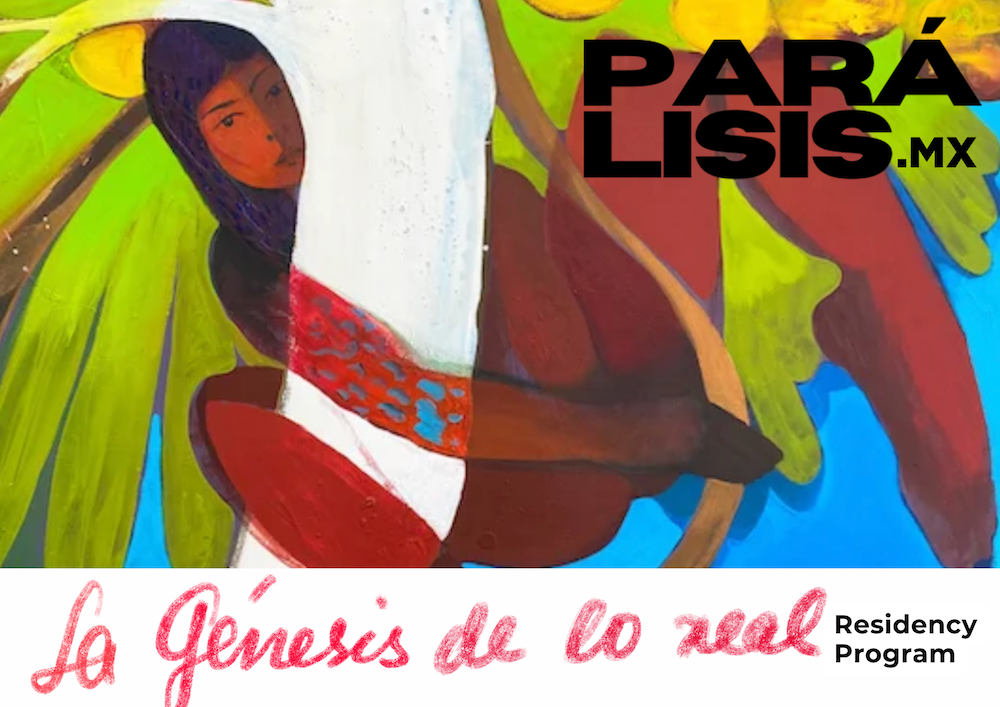
Program in collaboration with CEFC and Parálisis.mx
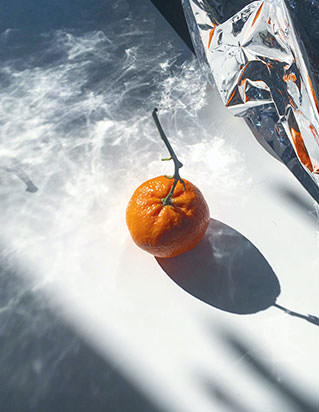
Artwork on the cover: Maikel Sotomayor
Located inside Haba ArtLab, our residency programs offer artists an opportunity to participate in a residency program «Genesis of reality” through their work or research.
This program invites artists to reflect on and interpret…
Where is the boundary drawn between what exists and what we imagine? Harmless fiction, fantasy, and sensible imagination constitute the primordial forces that shape our worldview. What we call «reality» is a construct woven from myths, languages, phantasmic structures, political fictions, and symbolic resonances that give it form and meaning.
In this residency program, we propose an artistic investigation into the genesis of the real through humanity’s fabulating capacity. We ask how myths, the imago, virtuality, childhood, and poetic languages enter the everyday to construct, question, or transform the frameworks we inhabit. This residency program thus becomes a laboratory to pursue poetic and speculative methods in order to activate the invisible and give birth to new worlds.
Application Due date: Abril 5, 2027
Program starts: Mayo 3
Program ends: Mayo 30
For details about price and what is included in all our residency programs please follow the link below:
Read more: Full Open Call / Self Directed Program
May 2027
Our goal is to advance the selected artists’ professional development by offering a supportive space for creative exploration. Up to 8 artists in residence will present their work in a Open Studio.
Participants are encouraged to collaborate with local art professionals, propose talks and workshops, and delve into Barcelona’s rich socio-cultural environment.
Below, we outline the central questions surrounding this theme along with inspirational references:
1. MYTH, ARCHETYPES, AND THE SYMBOLIC IMAGINATION.
In the face of disenchantment, myth and poetic fantasy act as resonance fields that organize experience—our way of recognizing the world. Mythic narratives and rarefied paradises outlast time, granting meaning to that which instrumental reason fails to name.
At this intersection, the landscape is revealed not as an objective datum to be documented, but as a living threshold that addresses and confronts us. Artistic practice thus acts as an invocation wherein pigment, form, and matter rename the world and even generate new symbols.
Authors / Artists
Gastón Bachelard, Ernst Cassirer, Gilbert Durand, Joseph Campbell, Peter Doig, Anish Kapoor, Guillermo Kuitca.
References
- Gaston Bachelard (The Poetics of Space and the imagination of matter): Bachelard demonstrates that imagination is not merely a faculty for forming images, but a force that deforms perceived images to liberate matter from its everyday weight. Fantasy, through poetic reverie and the primordial elements (earth, water, air, fire), becomes the tool through which human beings inhabit space and found the real.
- Ernst Cassirer (The Philosophy of Symbolic Forms): Posits myth not as an archaic superstition, but as a primary form of configuring reality. Mythical thought is an ontological structure that endows human existence with space, time, and sensible meaning.
- Gilbert Durand (The Anthropological Structures of the Imaginary): Develops the concept of the "anthropological trajectory": the ceaseless interplay between the subject's drives and the pressures of the objective environment, where the symbolic imagination creates a mythic shield against the passage of time and death.
- Joseph Campbell (The Hero with a Thousand Faces): Explores universal monomyths and archetypes, demonstrating how tales of creation and mythic journeys are psychic maps that restructure our perception of the physical world.
Artistic References:
- Peter Doig: Explores atmospheric, rarefied, and semi-mythic landscapes where personal memory and photographic archives dissolve into painterly impasto, transforming nature into a space of unreal reverie.
- Anish Kapoor: Uses pure pigments, concavities, and liminal forms to construct objects and installations that evoke primordial voids, primal landscapes, and mythic portals into the ineffable.
- Guillermo Kuitca: Intervenes in maps, architectural floor plans, and physical geographies to transform them into affective cartographies and poetic pictorial landscapes where geographic space turns into personal myth.
2. PHANTASMIC STRUCTURES, CHILDHOOD, AND THE SUBORDINATED.
Reality is also inhabited by absences, shadows, and phantasmic structures that uphold or fracture dominant narratives. From forgotten childhood to lives at the margins of the norm, fantasy operates as a distorting mirror where the invisibilized claims its place within social history and the narrative of the self.
Authors / Artists
Mark Fisher, Sigmund Freud & Julia Kristeva, Avery Gordon, Jacques Derrida, Walter Benjamin, Annette Messager, Do Ho Suh, Shritian Boltanski.
References
- Mark Fisher (The Weird and the Eerie): Fisher analyzes the weird (that which does not belong where it is) and the eerie (the presence of an absence, or the absence of a presence). These dimensions of the fantastic destabilize everyday reality, demonstrating that our certainties are hovered over by invisible forces and spectral structures that challenge the established order.
- Sigmund Freud & Julia Kristeva (The Uncanny [Das Unheimliche] and alterity): Freud defines the uncanny as that which ought to have remained hidden but has come to light, rendering the familiar profoundly strange. Kristeva adopts this idea to address childhood, the marginal, and trauma as unsettling presences that disturb the subject's peace and reveal reality to be a fragile, vulnerable seam.
- Avery Gordon (Ghostly Matters: Haunting and the Sociological Imagination): Proposes "haunting" as a key sociological category: the ghosts of social trauma and subordination are not superstitions, but real presences demanding political transformation in the present.
- Jacques Derrida (Specters of Marx): Introduces the concept of hauntology (hantologie), pointing out that the present is never fully alive or self-present, but rather inhabited and haunted by promises tied to the specters of the past and the future.
- Walter Benjamin (Berlin Childhood around 1900): Approaches everyday objects, toys, and childhood memory not as passive nostalgia, but as fragments charged with a "messianic force" capable of blasting apart the continuity of official history.
Artistic References:
- Annette Messager: Creates assemblages with dismembered stuffed animals, photographs, textiles, and threads to address childhood, domestic myths, the fragmentation of the body, and the tensions of private space.
- Do Ho Suh: Reconstructs his former homes and childhood infrastructures at a 1:1 scale using delicate, translucent silk fabrics, creating phantasmic and idyllic architectures that float between memory and absence.
- Christian Boltanski: Works with anonymous photographic archives, discarded garments, and dim lighting to evoke the memory of the absent, collective trauma, and the spectral imprint of subordinated lives.
3. IMAGOS, DIGITALITY, AND THE SUBLIME PHANTASÍA.
The imago and phantasía do not operate as mirrors of empirical reality, but rather as liturgies of the mind. They constitute the core of sensible figuration within the human psyche: the point of tension where the trace is experienced.
This axis investigates the relationship between what exists in potentiality and what materializes, exploring how simulation and the sublime construct parallel realities as tangible in their effects as the physical world.
The imago—archetypal crystallizations of the unconscious formulated by Carl Jung—operates as a symbolic incarnation of loss, filiation, and inner mystery. It is a tangible testimony to an absence.
Phantasía, understood from the classical Aristotelian tradition as the soul’s faculty to conceive visions in the absence of direct stimuli, is the mediating power between sensible perception (aisthesis) and intellective thought (nous).
The encounter between the figurative power of the imago and the outer limits of phantasía leads to the sublime, understood in the tradition of Longinus and Kant as the collapse of representation.
The intersection between the imago, digitality, and the sublime phantasía articulates the contemporary status of the image: a transition where figurative representation abandons the exclusive refuge of the psyche to incarnate within autonomous algorithmic architectures.
Authors / Artists
Gilles Deleuze, Édouard Glissant, Jean Baudrillard, Donna Haraway, Emanuel Coccia, Eduardo Kohn, Lynn Margulis, Jane Bennett, Tania Candiani, Rachel Whiteread, Superflex, Kiki Smith, Tomás Saraceno, Anicka Yi.
References
- Gilles Deleuze (The virtual as a real dimension): Deleuze insists that the virtual is not opposed to the real, but to the actual. The virtual possesses full reality, brimming with potentials, forces, and affects striving to incarnate. Artistic fantasy operates precisely at this threshold: actualizing virtual worlds that transform how we feel and interact with our environment.
- Édouard Glissant (Poetics of Relation): Conceptualizes "archipelagic thought" against continental thought: insularity is not isolation, but a networked space where identities are fluid, errant, and open to mythic imagination.
- Jean Baudrillard (Simulacra and Simulation): Analyzes how hyper-simulacra and virtuality replace the real with signs of the real, producing a territory where simulation precedes and engenders reality itself.
- Donna Haraway (Speculative fabulation and co-constituted becomings): Haraway proposes speculative fabulation (SF) as a necessary thought practice for inhabiting a planet in crisis. Imagining non-human, symbiotic, and monstrous narratives enables us to open reality to modes of coexistence that surpass the logics of extractivism and technical control.
- Emanuele Coccia (Sensible life and the metamorphosis of forms): Coccia argues that all species share one and the same world because they are crafted from the same sensible substance. Imagination is the fluid medium through which forms pass from one body to another, revealing that the real is an uninterrupted metamorphosis of images, matter, and life.
- Eduardo Kohn (How Forests Think): Develops an anthropology beyond the human, arguing that representation, thought, and sign production are not exclusive to our species, but belong to all biological life.
- Lynn Margulis (Symbiogenesis and endosymbiotic theory): Posits that evolution occurs not solely through competition, but through symbiogenesis: the fusion of heterogeneous organisms that create novel, hybrid, and composite life forms.
- Jane Bennett (Vibrant Matter: A Political Ecology of Things): Defends the "material agency" of the inorganic and non-human, proposing a materialist vitalism where things, crops, and bacteria actively produce reality.
Artistic References:
- Tania Candiani: Explores sound architectures, utopian mechanisms, and insular/territorial cartographies, translating data, ancient languages, and geographical spaces into immersive installations.
- Rachel Whiteread: Modifies the empty space surrounding objects and architectural structures (the "air" of a room or the void beneath a house), converting unseen virtual space into sculptural volumes of concrete and resin.
- Superflex: An artistic collective that develops virtual reality simulations, hyper-aestheticized scale models, and collective hypnosis to test utopian societies, dystopian scenarios, and alternative insular infrastructures.
- Kiki Smith: Explores the metamorphosis of the human body intertwined with fauna, biological cycles, skin, and plant life, creating mystical mythologies of interspecies transformation.
- Tomás Saraceno: Constructs sculptures suspended by living spiderwebs and Aerocene initiatives that probe hybrid infrastructures, symbiotic life forms, and eco-evolutionary aerial architectures in suspension
- Anicka Yi: Investigates metabolic memory, the microbiome, and synthetic mutations by employing live bacterial cultures, resin-frozen flowers, and volatile insect compounds in her works.
How to apply?
Send an email to spacehaah@gmail.com with:
CV and artístic experience.
Copy of your passport (must be valid for at least 3 months after the residency ends).
Portfolio (images, links to videos, or social media).
Project Proposal (summary, technical requirements, sketches, or references).
Email Subject: > «[Your Name] / Genesis Residency at Haba ArtLab [Dates]»


Deja una respuesta